Battlefield 6 Player Stats
Making a beloved platform relevant again.
How user-centered design literally shaped a player stats platform that balances emotional engagement, competitive depth, and scalability.
Role: Lead Product Designer

Defining what relevant personalization looks like through motivational drivers pillars.
SCOPE
Discovery + Validation
PHASES
3 research rounds
OUTCOME
MVP scope design phased approach
THE BRIEF
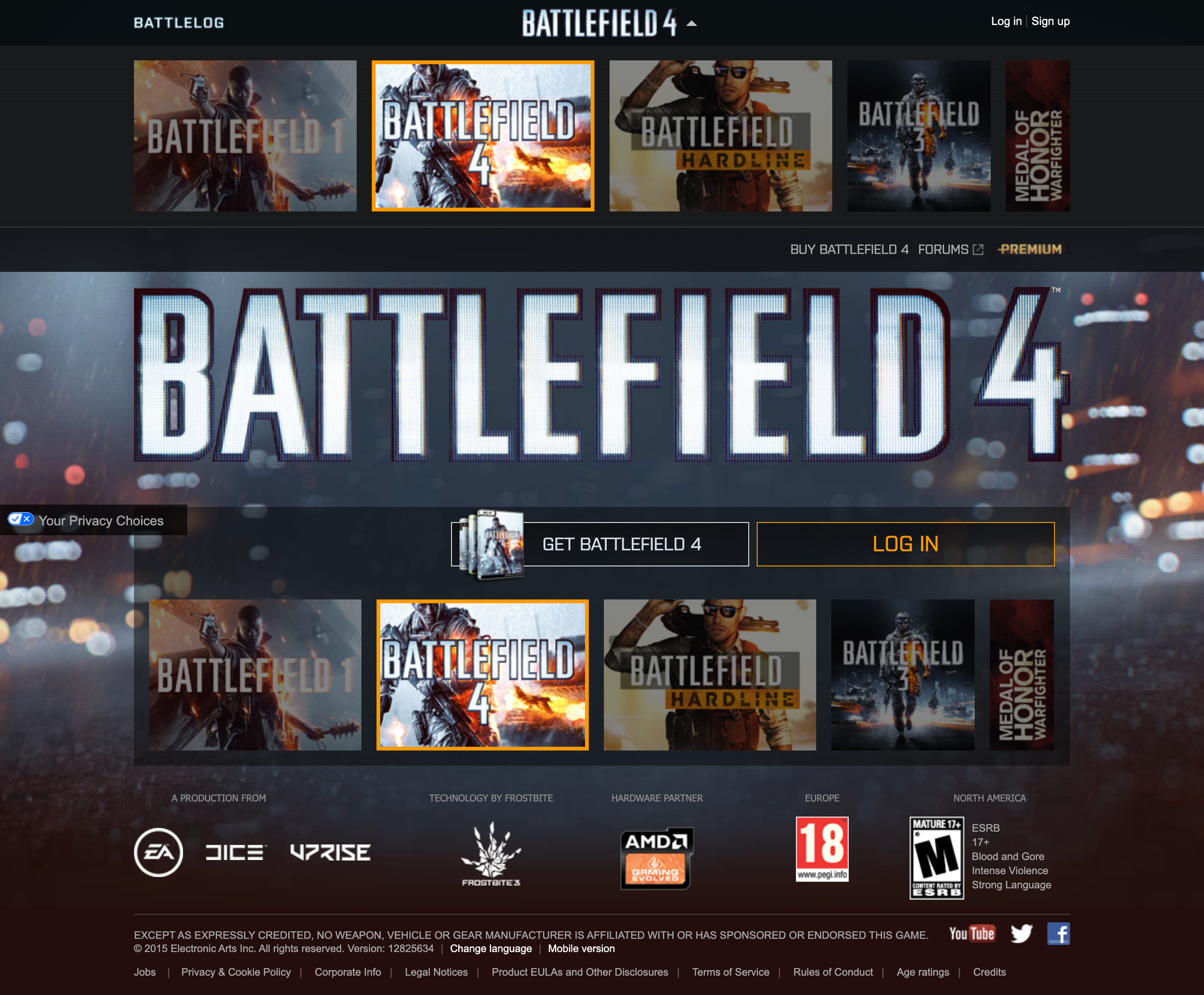
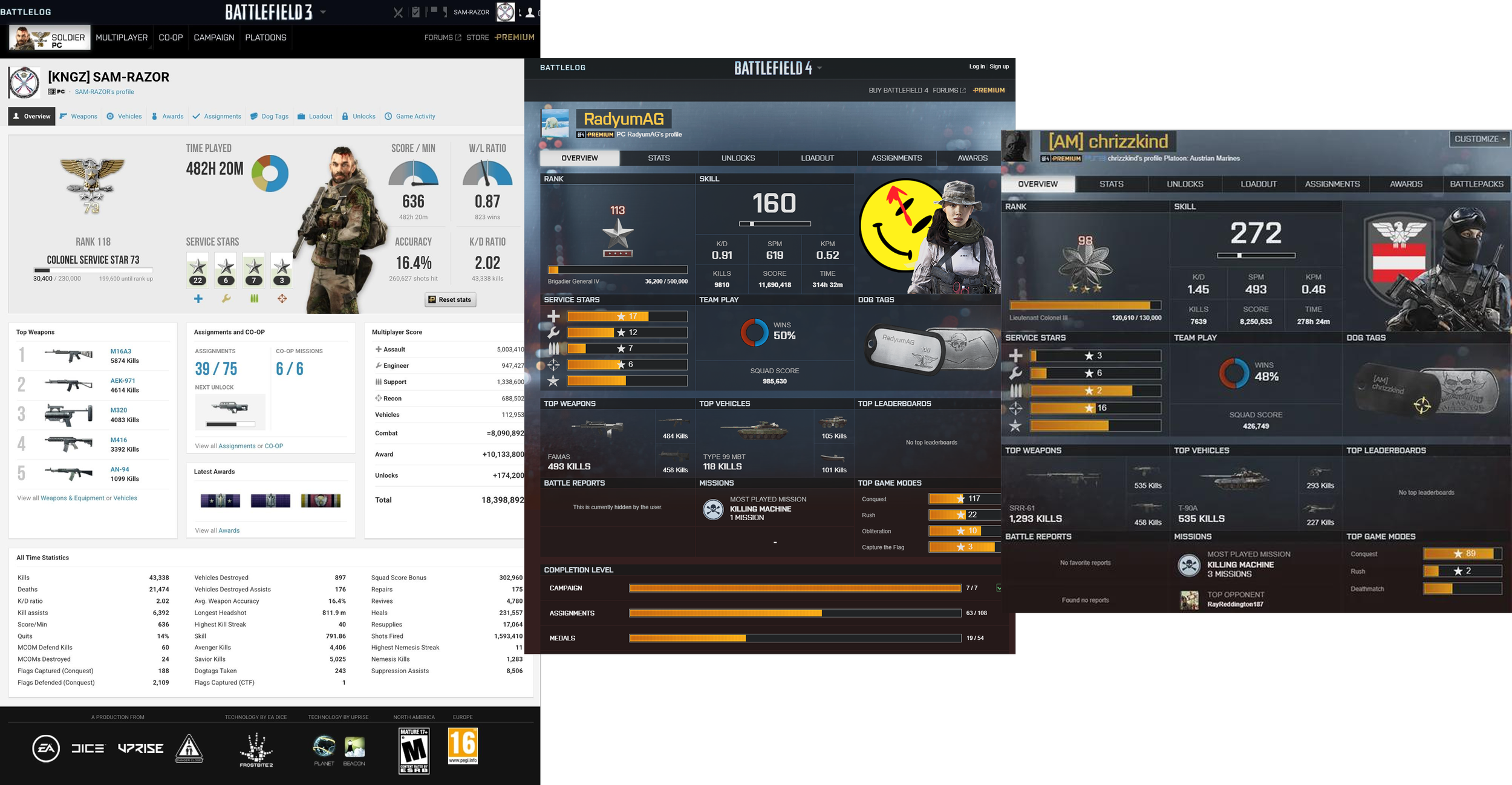
Battlefield 6 launched successfully into a competitive shooter market where stat tracking is central to player identity. Legacy stat platforms existed, but were fragmented and outdated across older titles.
Player stats in competitive shooters are deeply personal - representing skill, pride, and progression. We needed to identify which stats truly drive engagement and define a focused MVP that satisfied the expectations of a broad spectrum of players, while remaining technically scalable within a shared platform infrastructure.
The approach
Rather than starting with layout or feature assumptions, we structured a phased research strategy: first, understanding emotional drivers, then defining MVP priorities, and validating usability.
Understand motivational foundations
Exploratory interviews to understand why players use stat platforms and how stats shape in and beyond-game identity and behaviour.
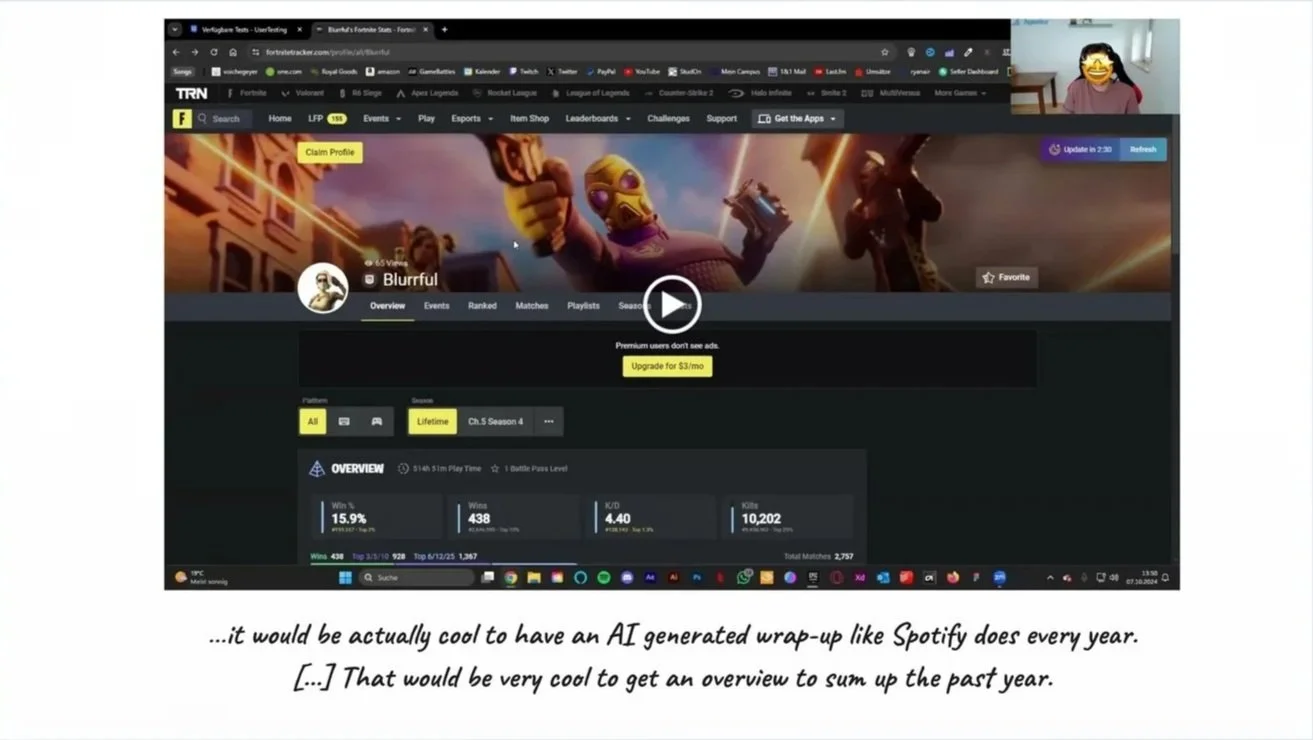
Translate motivation into structure
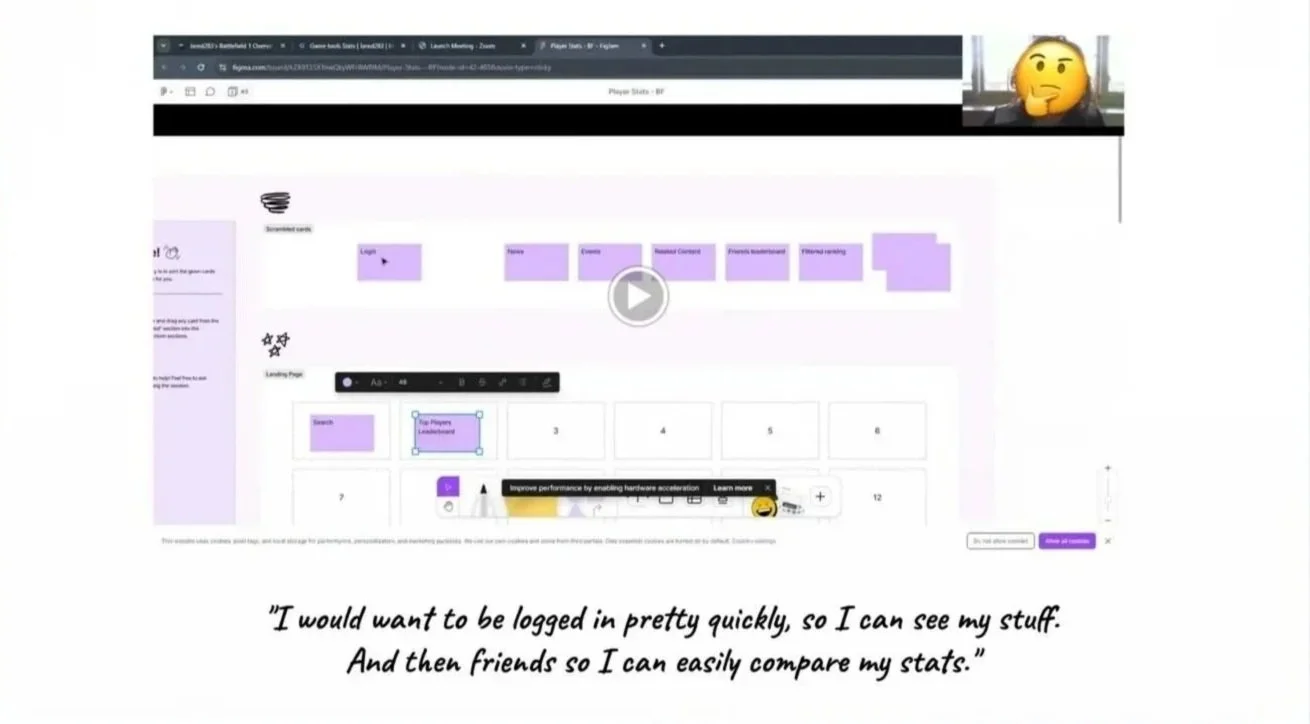
Persona refinement and card sorting to identify essential stats, prioritisation logic, and mental models for information architecture.
Unknowns:
What stats are relevant for different profiles of players?
Are stats relevant to all players?
Where are players finding these at the moment?
Build & validate the MVP prototype
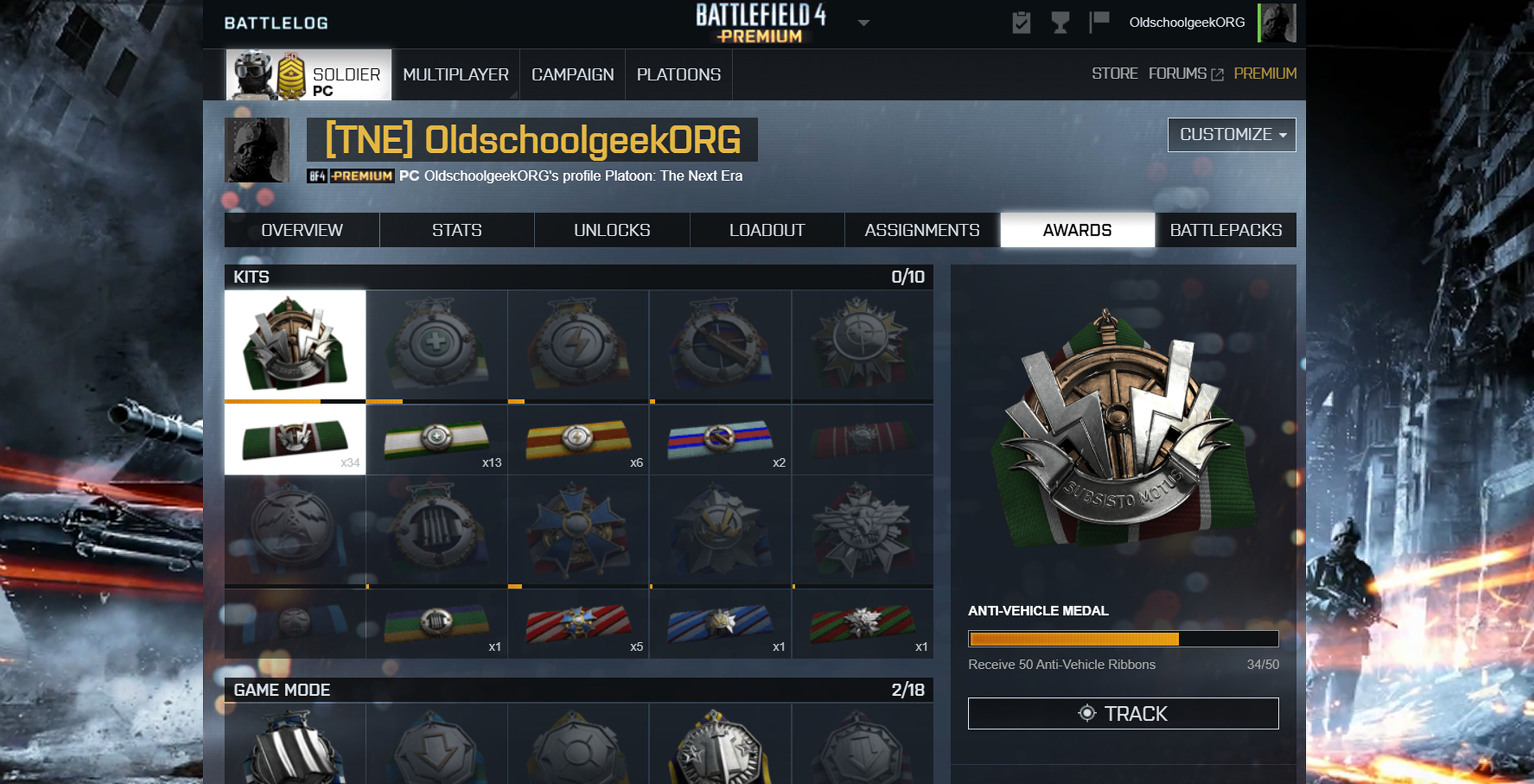
Clickable prototype tested for layout clarity, findability, and personalisation needs benchmarked against third-party trackers.
What matters to one player
can feel irrelevant to another.
RESEARCH DEEP DIVE
1 Motivational foundations
Understanding why players engage with stat platforms and what emotional drivers sustain long-term engagement. Stats represent identity, pride, validation, and progression for competitive players.
The importance of stats increases meaningfully as players improve their skills over time.
Two dominant motivations emerged: improvement & strategic mastery vs. competitive validation & comparison.
Personalisation and comparison surfaced as critical engagement levers across both player groups.
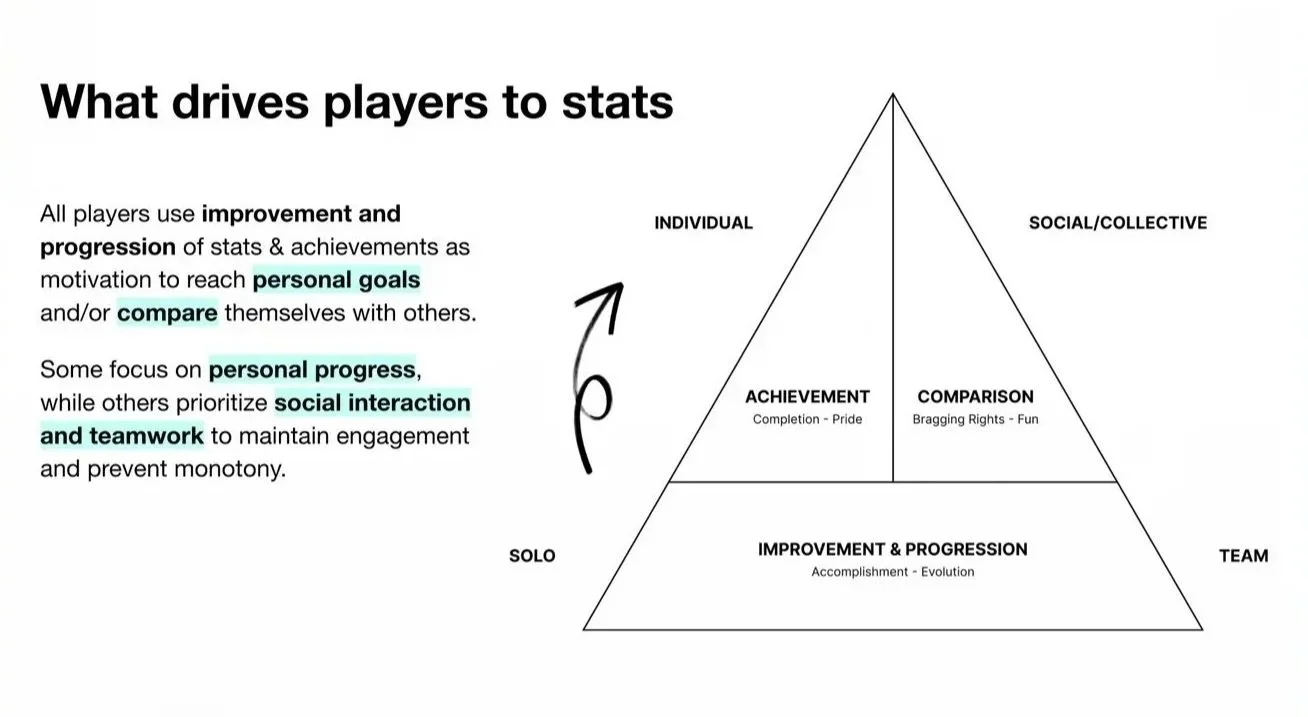
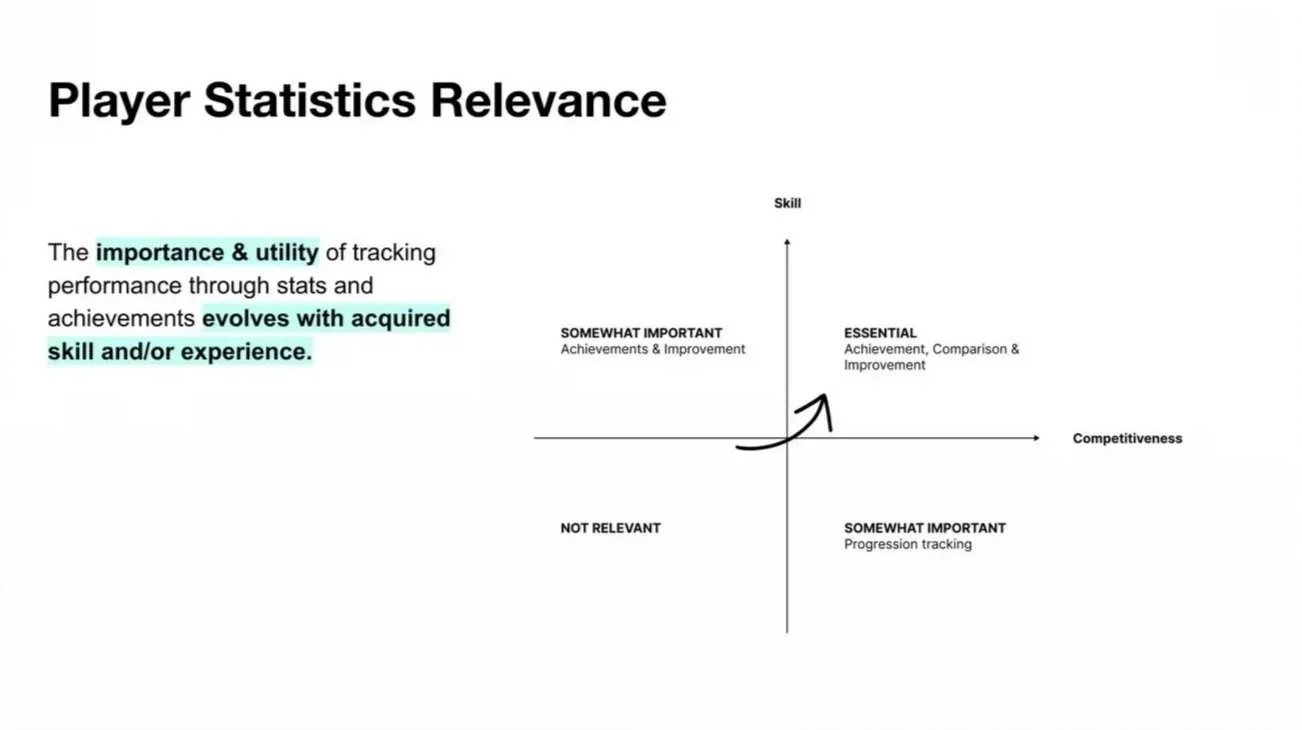
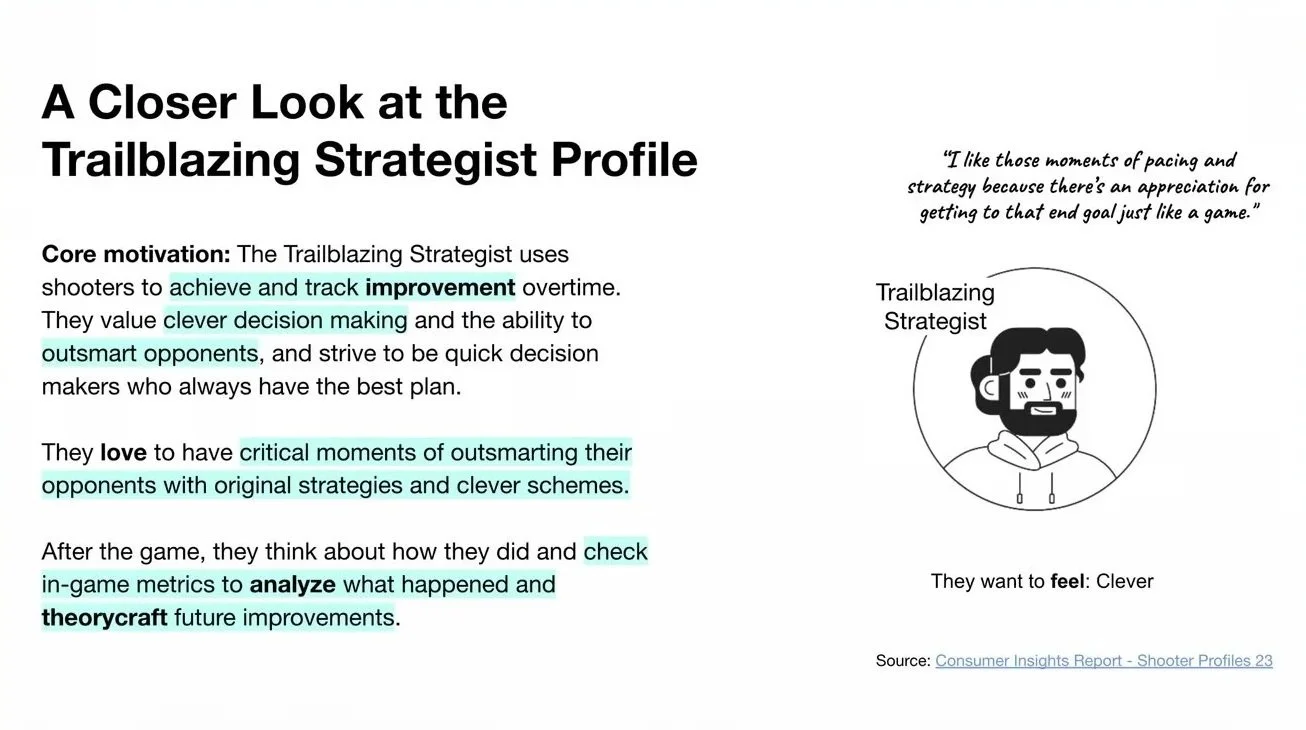
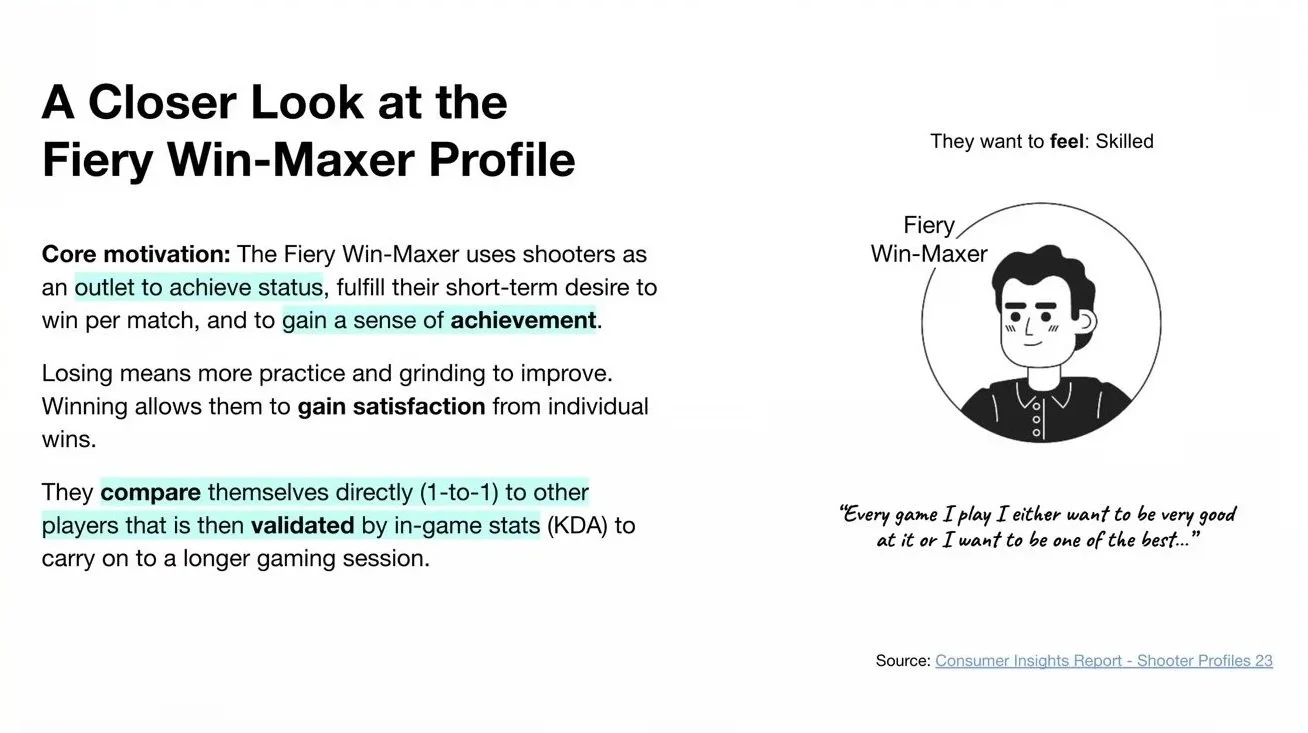
Personalization is an essential pillar.
RESEARCH DEEP DIVE
2 MVP prioritisation
Defining what truly belongs in the MVP and how stats should be showcased for engagement and impact.
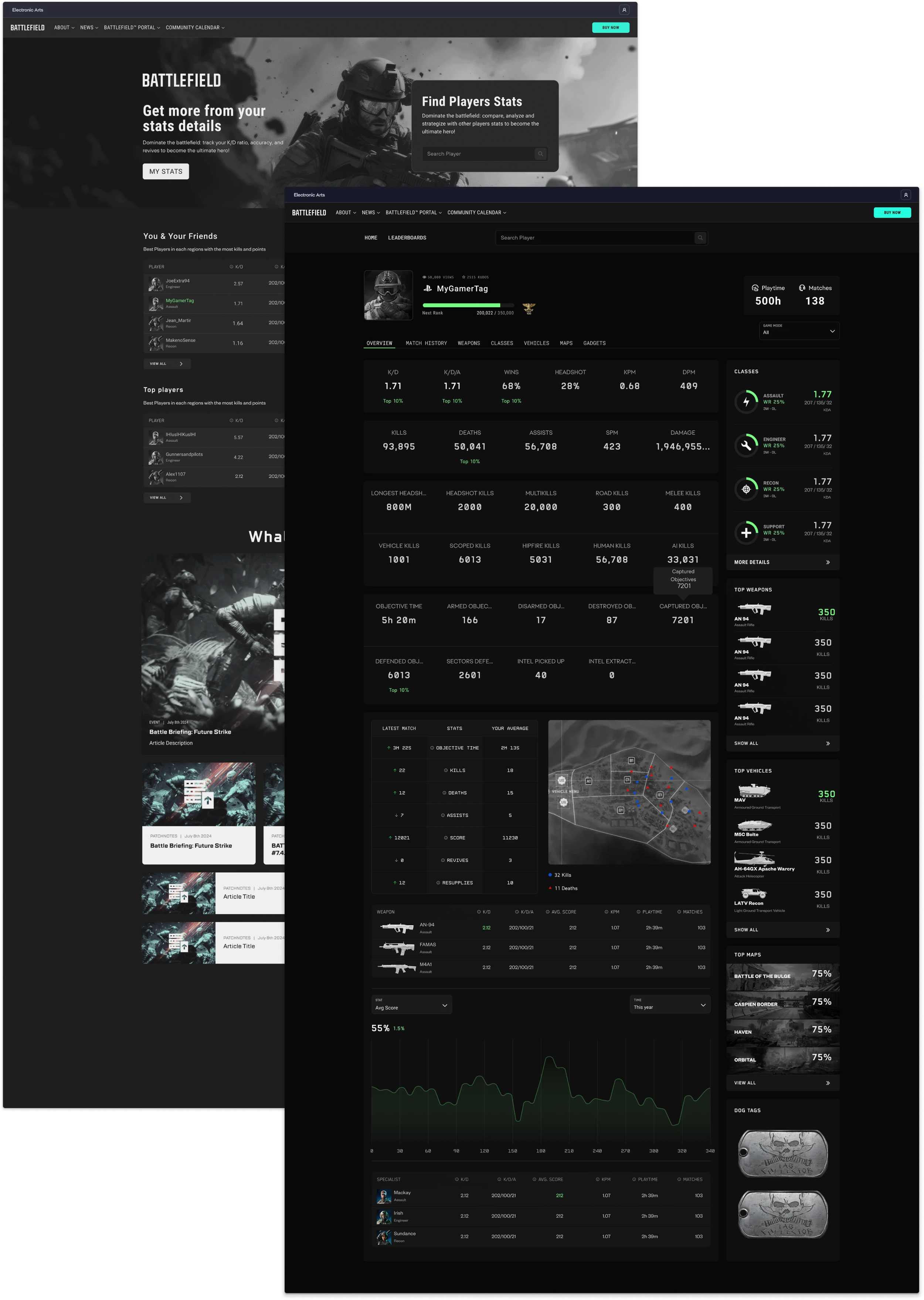
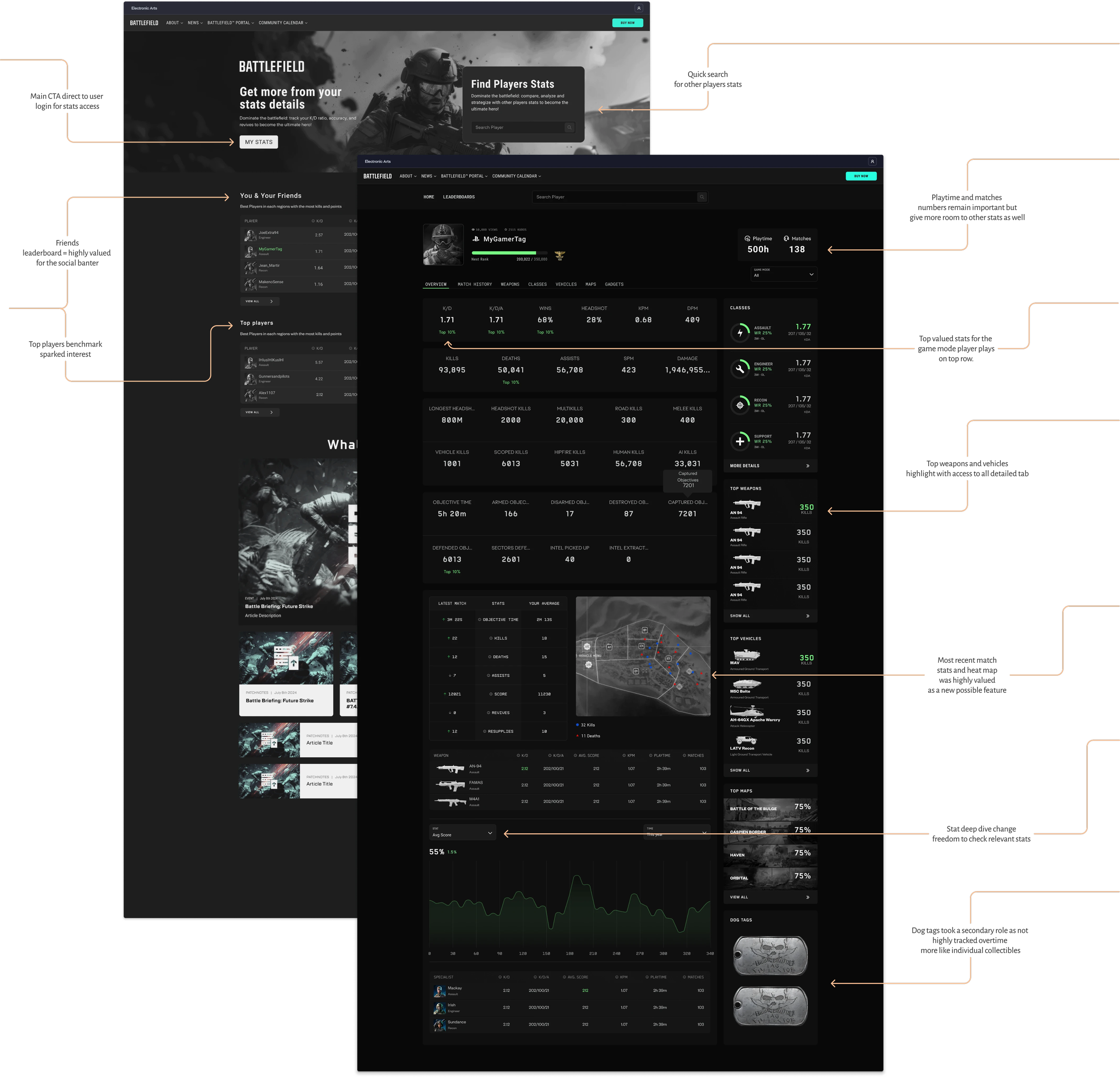
Playtime, Kill Death Assist, top weapons, and class performance ranked highest across all player types.
Certain metrics like Damage Per Minute were deprioritised despite initial team assumptions about their importance.
Stats hierarchy depends heavily on individual playstyle and, more specifically, preferred game mode.
Customisation is an expectation. Ease of access and fast login strongly influence retention.
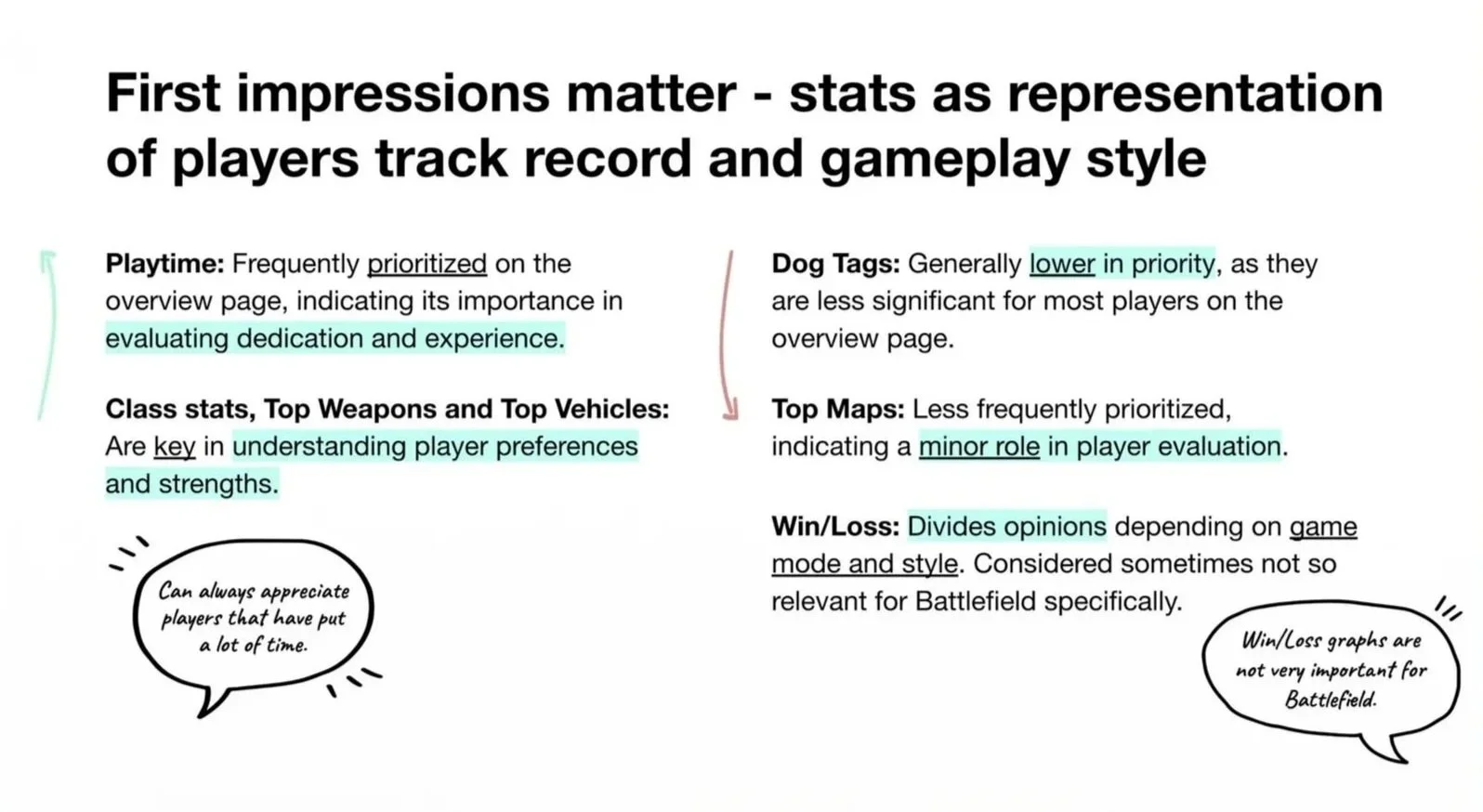
Individual progress married with friendly social competition.
RESEARCH DEEP DIVE
3 Prototype validation
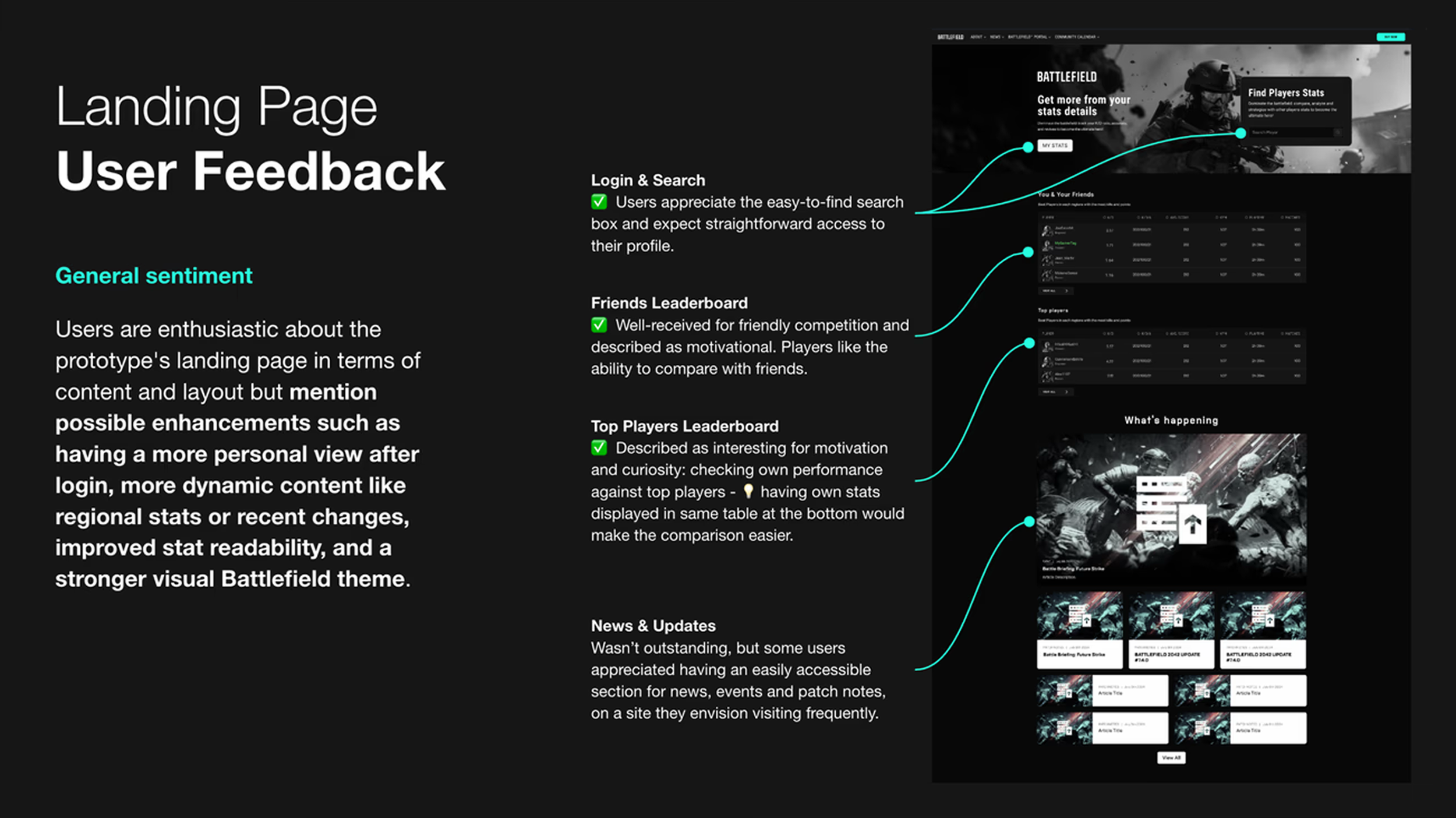
Validating appeal, clarity, and differentiation against existing third-party tracker platforms.
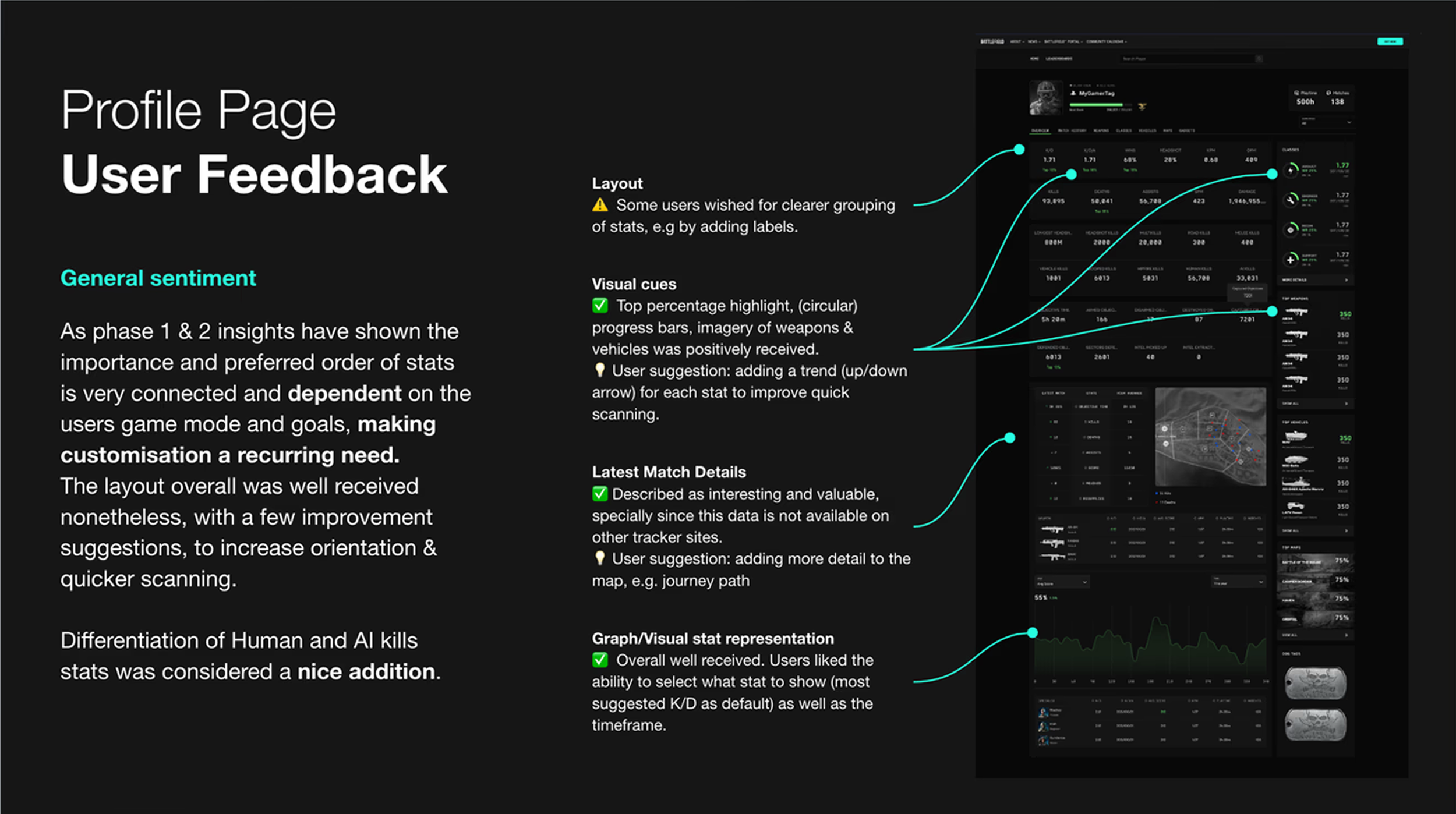
Our prototype was preferred over third-party trackers overall, a strong signal of product viability.
Leaderboards and friend comparison were strong motivators for sustained engagement.
Users requested trend indicators and improved stat scanning for quicker comprehension.
Personalisation remained a recurring theme, reinforcing Phase 1 and 2 findings across the entire study.
MAIN FINDING
High-impact stats,
strong usability.
The final solution emerged from emotional motivations guiding the information architecture, combined with visual clarity for scanning. Rather than designing a data-heavy dashboard, the MVP was deliberately scoped to deliver high-impact stats with strong usability, while staying technically feasible within platform constraints and scalability.
IMPACT
What the work shaped
Product MVP
High confidence
Defined a focused MVP grounded in real player motivations, not assumptions.
Product scope
Feasibility
Balanced data depth with template maintainability across the platform.
Product strategy
Clarity
Prevented premature cross-franchise rollout through research-backed recommendations.
PHASE 1 - MVP ROLLOUT
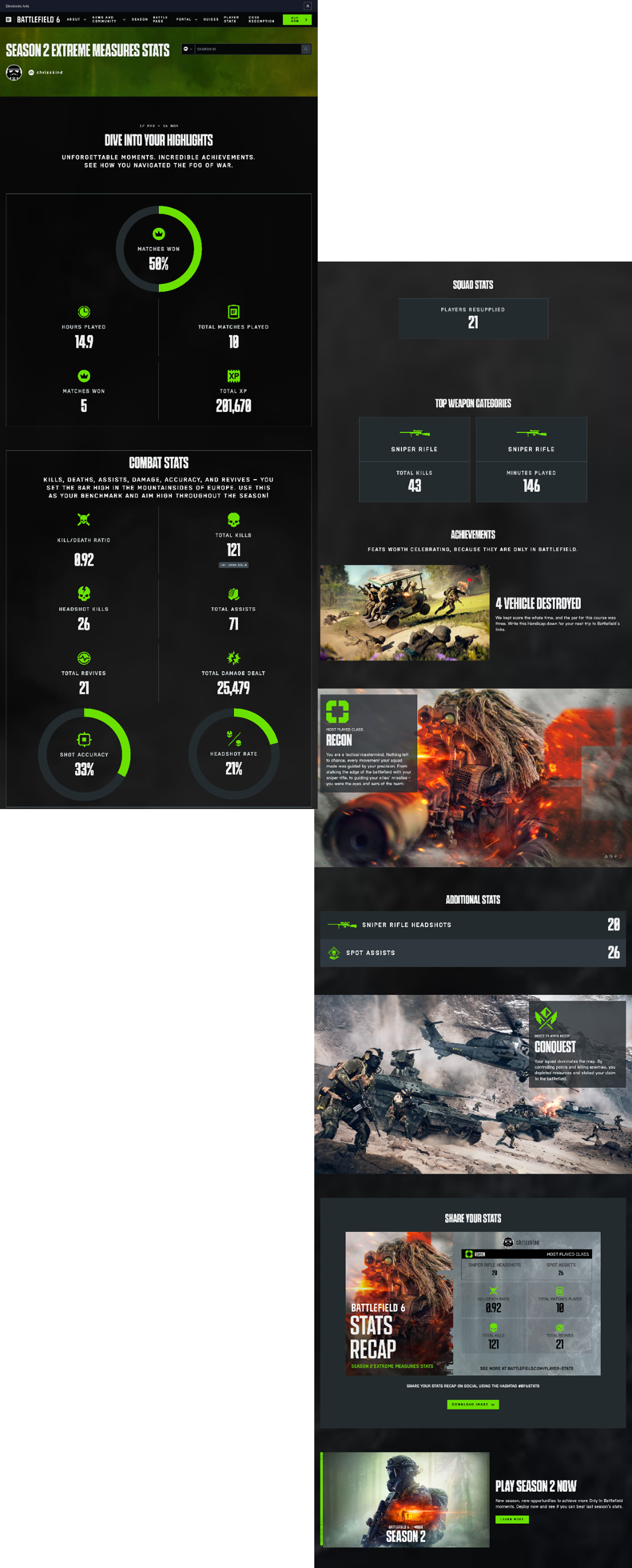
Players Stats portal
A public-facing web experience where players can look up their EA ID and see a rich breakdown of their season performance.
Including match history, combat stats, squad contributions, top weapon categories, most-played class and mode, and unique "Only in Battlefield" achievements.
What makes it more than a stats page: The experience is crafted, each section is framed with a narrative that reflects the player's actual playstyle. For example, a Recon main gets copy like "You are a tactical mastermind… you were the eyes and ears of the team."
Achievements are contextualized with playful commentary.
A personalized throwback of your season.
The value it brings to players:
Reflection and identity - It mirrors back how you play, reinforcing your identity within the game (sniper, support player, vehicle destroyer) and making you feel seen.
Motivation and benchmarking - Stats are framed as a "benchmark to beat," with a direct CTA to jump into the new season and top your own performance. It creates a natural re-engagement loop.
Shareability - Because it's a polished, public URL tied to your EA ID, it's inherently shareable players can show friends or post it on socials proudly as a kind of badge.
Seasonal freshness - Tying stats to seasons (with themed branding like "Extreme Measures") gives the recap a limited-time, event-like quality that drives urgency and repeat visits.
Turning raw telemetry into an emotionally resonant narrative that deepens player investment in Battlefield's live-service ecosystem. Delivering value and content for players becomes a retention and re-engagement tool.
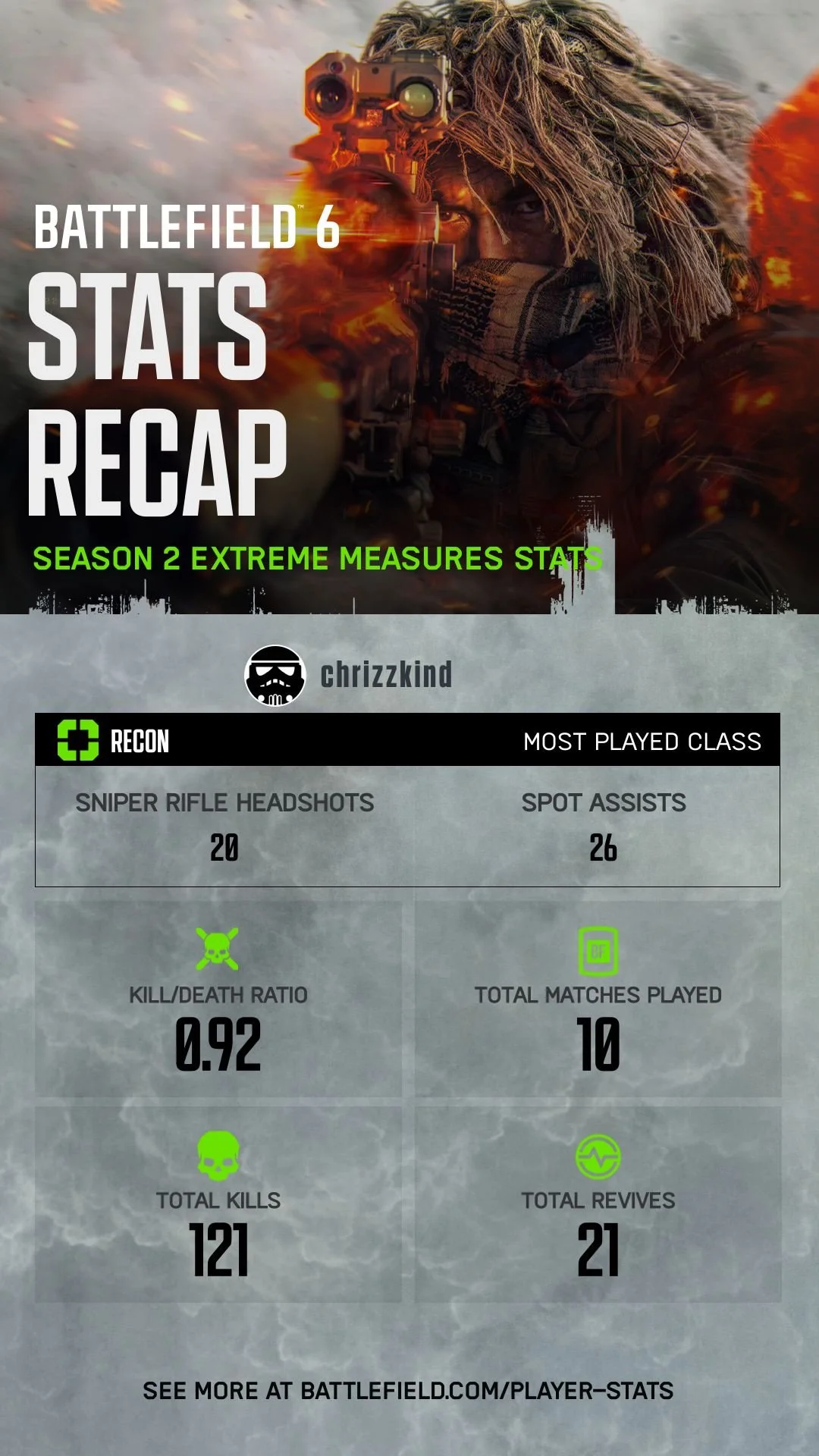
Share sheet stats snapshot
My main takeaways
1. Research de-risks product bets
A phased research strategy let us validate emotional drivers before committing to features - resulting in a focused, confident MVP scope.
2. MVP discipline is a design skill
Knowing what to leave out was as important as what to include. Card sorting and priority mapping gave us the evidence to push back on scope creep.
3. User needs guided strategy for confidence
Deep understanding of each audience's unique motivations brings clarity to inform product strategy.

Role
Lead Product Designer
Credits
Director of Design:
Jeffrey Lam
UXR Designer:
Anastasia Gunko